Meditations: Book IV
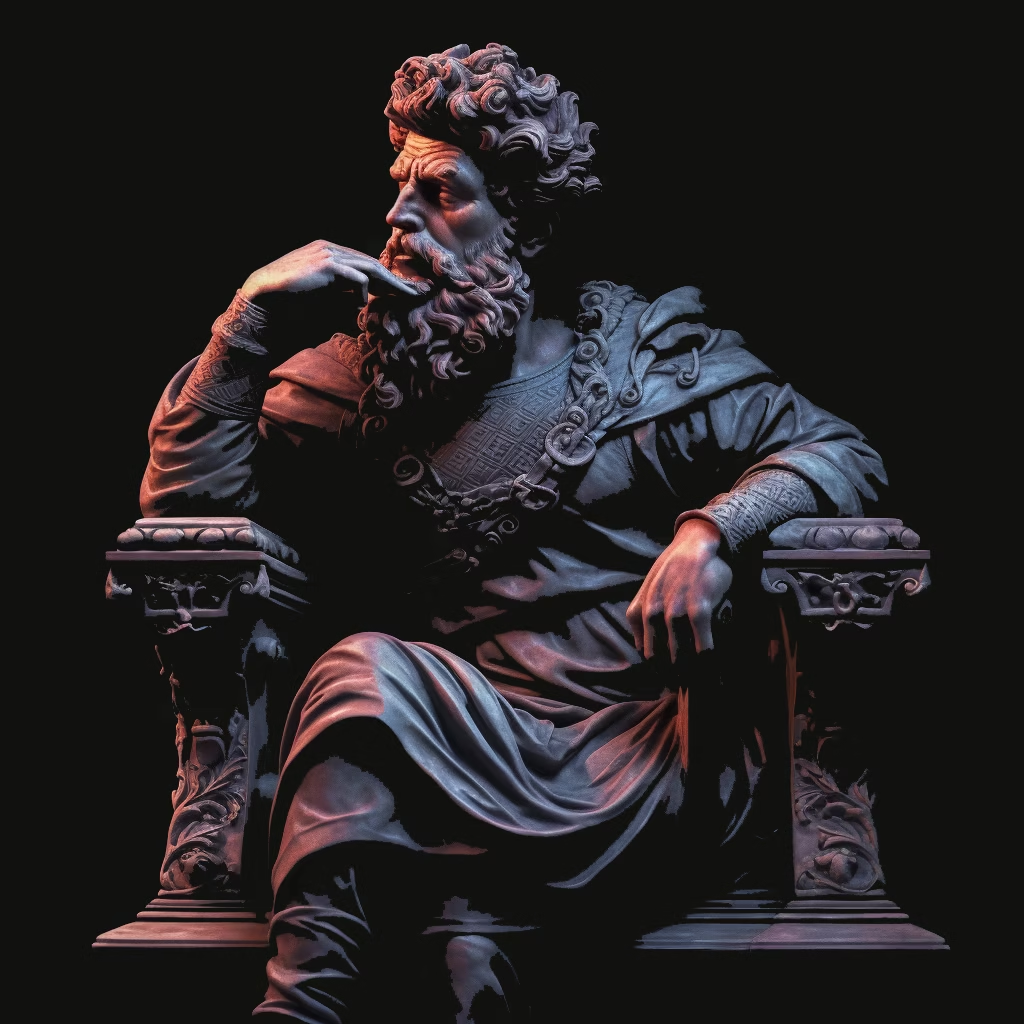
The Inner CitadelBook IV is one of the longest and most philosophically rich books of the Meditations. It contains some of Marcus' most famous passages, including the celebrated image of the mind as an inner citadel that no external force can breach. The book is deeply concerned with the relationship between the individual and the cosmos, and with the power of the mind to maintain its tranquillity regardless of external circumstances.
The Inner Citadel (4.1–4.3)
The opening of Book IV contains one of the most powerful passages in all of Stoic literature: "The ruling faculty is master of itself. When it withdraws into itself and is content with itself, it is like a sphere, perfectly balanced, smooth and round." The image is of a mind so perfectly ordered that nothing external can disturb it.
Marcus argues that the mind is inviolable — not because nothing bad can happen to it, but because it can choose how to interpret everything that happens. "Things stand outside the door, on their own, not knowing anything and not saying anything," he writes. "What is it that pronounces judgment on them? The ruling faculty." This is the core of Stoic epistemology: it is not events that disturb us, but our judgments about events.
The View from Above (4.4–4.7)
Book IV introduces the famous "view from above" — a practice of imaginatively zooming out to see human affairs from a cosmic perspective. "Look down from above at the thousands of ships, the thousands of people, the thousands of lives," Marcus writes. "Think of them all, all at once, and then imagine the infinite stretches of time before and after."
This is not mere poetry. It is a deliberate philosophical exercise designed to put our troubles in perspective. The quarrel that seems so important, the insult that stings so deeply — when seen from above, from the perspective of eternity, they shrink to nothing. The view from above is a technique for cultivating equanimity.
Things stand outside the door, on their own, not knowing anything and not saying anything. What is it that pronounces judgment on them? The ruling faculty. — Marcus Aurelius, Meditations 4.3
The River of Change (4.8–4.14)
Marcus returns to the theme of constant change. "Time is a river," he writes, "a violent current of events, glimpsed once and already carried past us." Nothing is stable; everything flows. The wise person does not cling to any particular state of affairs but accepts the natural flow of change.
This acceptance is not passive resignation. It is the recognition that resistance to what is necessary is futile and self-destructive. The Stoic does not waste energy fighting reality. Instead, they channel their energy into what they can control: their own judgments, choices, and actions.
The Allotment of Nature (4.15–4.30)
The second half of Book IV is a series of shorter reflections on the nature of the universe and our place in it. "Everything is interwoven," Marcus writes, "and the bond that unites them is sacred." He argues that the rational person will accept whatever the universe sends, not because it is pleasant, but because it is what the nature of the whole requires.
This is the Stoic doctrine of amor fati — the love of fate. Not merely accepting what happens, but embracing it as necessary for the perfection of the whole. "A man's true delight is to do the things that are proper to a human being," Marcus writes. And what is proper to a human being? To act with reason, justice, and kindness, whatever the circumstances.
Modern Relevance
Book IV is arguably the most important book of the Meditations for the modern reader. The concept of the inner citadel — the mind as an inviolable fortress — has inspired countless psychological approaches to resilience. The view from above is a powerful technique for gaining perspective on our problems, widely used in mindfulness and acceptance-based therapies.
The river of change passage reminds us that clinging to the way things are is a source of suffering. The Stoic response is not to resist change but to flow with it, focusing our energy on what we can control and accepting what we cannot.
The Text of Book IV
The following is a modernised adaptation of the George Long translation.
4.1
The ruling faculty is master of itself. When it withdraws into itself and is content with itself, it is like a sphere, perfectly balanced, smooth and round. Nothing can disturb it.
4.2
Let no one hear you complaining about life at court, or at your own life. Let your thoughts be worthy of a rational being and a citizen of the highest city, of which all other cities are but households.
4.3
Things stand outside the door, on their own, not knowing anything and not saying anything. What is it that pronounces judgment on them? The ruling faculty.
4.4
Look down from above at the thousands of ships, the thousands of people, the thousands of lives. Think of them all at once, and then imagine the infinite stretches of time before and after.
4.5
The mind of the universe is social. It has made all things for the sake of the whole, and has fitted each part to the whole. Understand this, and you will see the purpose in everything.
4.6
You always have the option of having no opinion. There is no need to be disturbed by things that do not enter your own mind. Nothing can disturb you unless you let it.
4.7
Think of the whole universe, of which you are a tiny part. Think of the whole of time, of which you have been assigned a brief moment. Think of fate, of which you are a small link.
4.8
Time is a river, a violent current of events, glimpsed once and already carried past us. No sooner does a thing appear than it is gone.
4.9
Everything that happens is as natural and familiar as roses in spring or fruit in summer. Disease, death, slander, intrigue — all are part of the natural order.
4.10
What is it that disturbs you? Your own judgment. Remove the judgment, and the disturbance is gone.
4.11
Everything is interwoven, and the bond that unites them is sacred. Nothing is foreign or unrelated. The whole is ordered with beauty and purpose.
4.12
The nature of the universe loves nothing so much as to change the things that are and to make new things like them. All that exists is the seed of what will be.
4.13
A man's true delight is to do the things that are proper to a human being. And what is proper to a human being? To act with kindness, justice, and truth.
4.14
Do not be anxious about the future. You will face it, when you must, with the same reason that you apply to the present.
4.15
The universe is transformation; life is opinion. Nothing belongs to you but this moment. Live it well.